State and Federal Regulation: How US Rules Apply to Businesses
A business can comply with a federal rule and still violate a state requirement. The reverse can also happen: a state license or approval does not automatically satisfy federal law. In the United States, the first compliance question is therefore not simply what is the rule? It is which authority regulates this activity, in which state, for which entity, and at what point in the transaction?

A company doing business across U.S. state lines may face federal, state, county, and city requirements. Map where the product is made, sold, or used, identify each responsible agency, and check whether a permit, product rule, tax, or state licensing requirement applies.
What Is the Difference Between State and Federal Regulation?
Federal regulation consists of rules issued by federal agencies under authority granted by federal law. State regulation includes rules and requirements adopted under the laws of individual US states. Both operate within the constitutional system of federalism, which distributes authority between the federal government and the states. Municipalities and counties can also impose local requirements where authorized.
| Question | Federal level | State level |
|---|---|---|
| Who creates the underlying law? | US Congress | State legislatures |
| Who implements rules? | Federal agencies such as FDA, EPA, OSHA and FTC | State departments, commissions and licensing boards |
| Where does a rule apply? | Within the scope of federal jurisdiction | Within the state's jurisdiction, subject to federal law |
| Where are rules published? | Federal Register and Code of Federal Regulations | State registers and administrative codes |
| Who enforces them? | Authorized federal agencies and courts | Authorized state agencies, attorneys general and courts |
| Can requirements overlap? | Yes. Some areas involve parallel duties, shared programs or federal preemption. | |
Do not assume that federal rules always set a minimum or that states may always add stricter standards. The governing statute and preemption doctrine decide whether the requirements can coexist.
How the US Regulatory System Works
Constitutional authority and federalism
The US Constitution establishes federal powers, including Congress's authority over interstate and foreign commerce. The Tenth Amendment reserves powers not delegated to the federal government, or prohibited to the states, to the states or the people. The Supremacy Clause makes valid federal law supreme over conflicting state law. Together, these principles shape federal, state and concurrent regulatory authority.
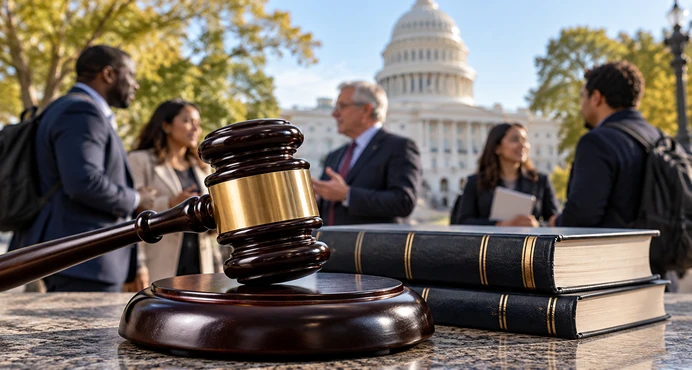
Federal preemption is the legal mechanism by which federal law displaces state law in a particular field or conflict. Preemption may be express in a statute or implied by the statutory scheme. Conflict preemption may arise where compliance with both rules is impossible or where state law obstructs federal objectives; field preemption concerns an area Congress intended federal law to occupy. Whether preemption applies requires analysis of the particular law, not a general assumption that federal rules always cancel stricter state standards.
Statutes, regulations and guidance are not interchangeable
A statute is enacted by a legislature. An agency regulation is adopted under delegated legal authority and, when valid and applicable, may impose binding obligations. An executive order directs executive-branch activity within the president's lawful authority but is not automatically a substitute for legislation. Agency guidance, interpretive statements and frequently asked questions can explain enforcement approaches without necessarily creating new legal duties.
For federal research, the United States Code (USC) organizes federal statutes, the Federal Register publishes agency notices and rules, and the Electronic Code of Federal Regulations (eCFR) provides a current editorial compilation of federal regulations. Check the effective date, amendments, agency authority and any relevant court decisions before relying on a provision.
How Regulations Are Created and Challenged
The Administrative Procedure Act (APA) provides a central framework for federal administrative rulemaking and judicial review, subject to statutory exceptions. A typical notice-and-comment process begins with an agency's proposal, often a Notice of Proposed Rulemaking (NPRM), followed by a public comment period, consideration of submissions and publication of a final rule with an effective date. Some rules follow different procedures, including interim final rules or exceptions allowed by law.

- Identify authority: find the statute that empowers the agency to regulate the activity.
- Read the proposal: determine the entities, products, conduct and jurisdictions covered.
- Check the record: review public comments, agency explanations and any regulatory impact analysis or cost-benefit analysis.
- Confirm final status: distinguish a proposed rule from a final, effective requirement; review transition periods and compliance deadlines.
- Track challenges: judicial review or administrative proceedings may affect interpretation, enforcement or validity.
The Unified Agenda lists planned regulatory actions; Regulations.gov hosts many federal rulemaking dockets and public comments. Neither replaces the binding text or its effective date.
Which Agencies Regulate Which Activities?
Regulatory jurisdiction follows the activity and statute, not an agency's broad mission statement. A food importer may deal with FDA and CBP for different reasons; an employer may have separate labor and workplace-safety duties.
| Agency or regulator | Typical regulatory area | Practical trigger |
|---|---|---|
| Food and Drug Administration (FDA) | Food, drugs, medical devices, cosmetics and certain other regulated products | Product classification, labeling, import and marketing |
| Environmental Protection Agency (EPA) | Environmental protection and programs under statutes such as the Clean Air Act and Clean Water Act | Emissions, discharges, chemicals or regulated facilities |
| Occupational Safety and Health Administration (OSHA), Department of Labor (DOL) | Workplace safety under the Occupational Safety and Health Act | Covered US workplaces and employment operations |
| Federal Trade Commission (FTC) | Consumer protection and competition | Advertising claims, unfair or deceptive practices |
| Securities and Exchange Commission (SEC) | Securities markets and covered disclosures | Offering or trading regulated securities |
| Federal Communications Commission (FCC) | Communications and covered equipment | Wireless or communications products and services |
| Federal Reserve and other banking regulators | Banking and financial supervision | Institution type, charter and financial activity |
| Equal Employment Opportunity Commission (EEOC) | Federal employment discrimination laws | Covered employers and employment practices |
| Department of Transportation (DOT) | Transportation safety and sectoral rules | Transport modes, operators and shipments |
| Internal Revenue Service (IRS) | Federal tax administration | US tax status, income, employment and reporting |
State agencies handle distinct responsibilities, including environmental permits, labor standards, insurance supervision, banking, utilities and professional licensing. County and city authorities may control zoning, building permits and local operations.
When Federal and State Requirements Overlap
Workplace safety: an example of cooperative federalism
OSHA-approved State Plans are state-operated occupational safety and health programs monitored by federal OSHA. They must be at least as effective as the federal program, but can use different or additional requirements within their approved scope. Some State Plans cover private-sector workers and state or local government employees; others cover only state and local government workers. Federal OSHA may retain jurisdiction over excluded workplaces or activities. The OSHA State Plans directory identifies the applicable program and coverage.
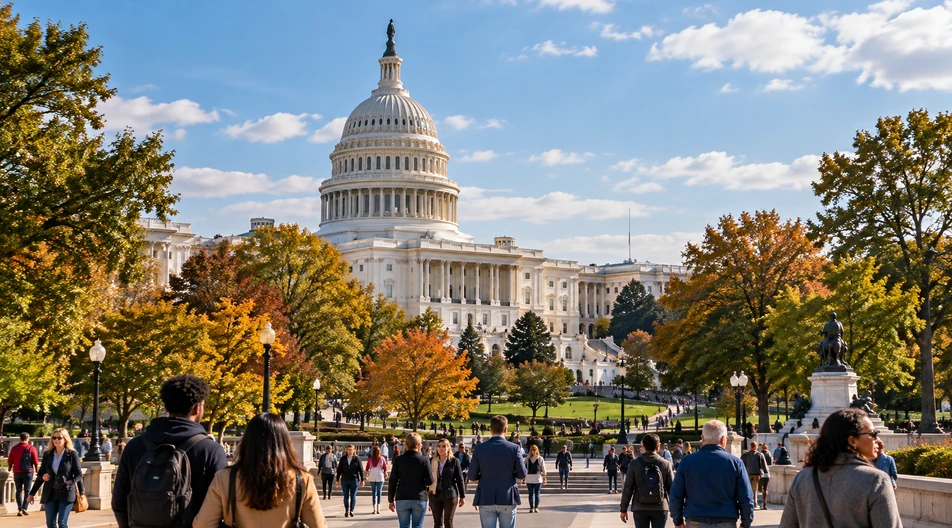
A company doing business across U.S. state lines may face federal, state, county, and city requirements. Map where the product is made, sold, or used, identify each responsible agency, and check whether a permit, product rule, tax, or state licensing requirement applies.
Environmental permits: multiple approvals may be necessary
Environmental regulation can involve federal standards, state implementation and local permits. A facility's emissions, wastewater discharge, waste management or chemical handling may trigger different programs under the Clean Air Act, Clean Water Act or related laws. EPA may administer a program directly or work with an authorized state agency. Federal authorization of a state program does not mean every facility needs identical permits nationwide.
Employment and consumer rules: overlapping obligations
Federal minimum wage and overtime rules under the Fair Labor Standards Act can coexist with state wage-and-hour requirements. Employers should identify the rule that legally applies to each worker and circumstance rather than assuming a single national pay standard resolves every obligation. Worker classification, paid leave, occupational licensing and anti-discrimination obligations may require separate analysis.
The FTC can challenge deceptive marketing under federal law. State attorneys general may enforce separate consumer-protection laws. A privacy obligation also depends on the statute's scope and thresholds; a US customer alone does not establish every state privacy duty.
State and Federal Regulation in the United States

Scenario 1: exporting packaged food
Scenario 2: selling connected electronic devices
Scenario 3: operating a US subsidiary or hiring workers
Forming a company in one state does not automatically authorize regulated operations in every other state. Corporate registration, foreign qualification in other states, employer registration, tax obligations, professional licensing, workplace safety and local zoning can apply independently. A business should check the physical work location and actual services provided, not only its state of incorporation.
State and Federal Regulation in the United States
A digital platform without US premises may still face US legal obligations, but geographic access by US users alone does not establish every conceivable duty. Relevant factors may include targeted commercial activity, customer location, data processing, statutory thresholds, contractual arrangements and jurisdictional rules. Privacy, advertising, financial services and consumer protection must be evaluated separately; there is no single US digital-services license that resolves them all.
A Practical State and Federal Compliance Decision Process
Build a jurisdiction-by-activity matrix. Each row should identify a business activity, the law that governs it, the regulator, the deadline and the document that proves compliance.

- Map the activity. Record the product or service, import route, sales channels, employees, facilities, customer locations and regulated data.
- Identify federal triggers. Check applicable statutes, federal regulations, agency jurisdiction, registration, testing, labeling, reporting and recordkeeping requirements.
- Identify state and local triggers. List states where goods are sold, employees work, facilities operate or legally relevant activities occur; then check licensing, taxes, privacy, consumer, employment and permit rules.
- Test for preemption and exemptions. Determine whether federal law displaces a particular state requirement or permits stricter state standards. Check size thresholds, exemptions and exclusions before assuming applicability.
- Assign evidence and owners. Keep permits, certificates, compliance audits, inspections, filings, policies and supporting records with the responsible team and renewal date.
- Monitor change. Track proposed rules, final rules, enforcement guidance, judicial decisions and state amendments. Reassess when products, locations, workforce or business models change.
| Compliance record | Question it must answer |
|---|---|
| Legal authority and citation | Which statute or regulation creates the duty? |
| Jurisdiction and scope | Which entity, activity and location are covered? |
| Effective date and deadline | When does compliance become necessary? |
| Responsible agency | Who grants approval, conducts inspections or enforces the rule? |
| Evidence and status | Which filing, test, license or record demonstrates compliance? |
| Review trigger | What regulatory or operational change requires reassessment? |
A missing import filing can delay a shipment; an unlicensed professional service may have to stop operating even if the company is incorporated. Penalties and enforcement measures depend on the governing statute, the violation and the regulator's powers.
Recommended Materials
OSHA State Plans — state-administered workplace safety programs.
Federal Register — proposed rules, final rules and notices.
Electronic Code of Federal Regulations (eCFR) — current federal regulatory text.
Frequently Asked Questions
No. Valid federal law prevails where the Constitution and applicable preemption principles require it, but states retain substantial regulatory authority. Many federal programs permit state implementation or additional state protections.
Sometimes. Whether it can depends on the statute and preemption framework. OSHA-approved State Plans, for example, must provide protection at least as effective as the federal program and may impose different or additional requirements within their scope.
No. Federal approval and state or local licensing may govern different parts of the same operation. Check each requirement for the activity and jurisdiction.
Not necessarily. Company registration, tax nexus and consumer-protection obligations follow different legal tests. Physical presence is not the only possible trigger.
The Federal Register publishes agency documents, including proposed and final rules. The CFR organizes the general and permanent federal regulations; the eCFR provides an updated editorial compilation. Consult publication and effective-date information when changes are recent.
Enforcement depends on the statute, delegation, approved state program and specific subject matter. Some programs assign primary enforcement to states under federal oversight, while others preserve federal jurisdiction or permit parallel action.
Guidance may explain an agency's interpretation or enforcement policy, but it does not automatically have the force of a legislative rule. Read the underlying statute and binding regulations to determine the legal duty.
Identify the exact legal provisions, covered activity and dates; determine whether both can be satisfied; review express and implied preemption and any relevant judicial interpretation; and obtain qualified US legal advice when the conflict affects a significant business decision.
Read Similar Articles

Defending consumer rights against predatory corporate practices, deceptive billing, algorithmic bias, and product safety risks.
Learn More
Assessing welfare architecture, social safety nets, healthcare subsidies, and public institutional responsiveness.
Learn More