Conferences and Workshops: Turning Civic Dialogue into Action in the United States
U.S. conferences and workshops should be designed around the decision at stake and who needs to take part. Consider travel, cost, disability access, interpretation, work schedules, caregiving, broadband, and whether remote participants can contribute on equal terms.
What Are Conferences and Workshops in Civic Dialogue?
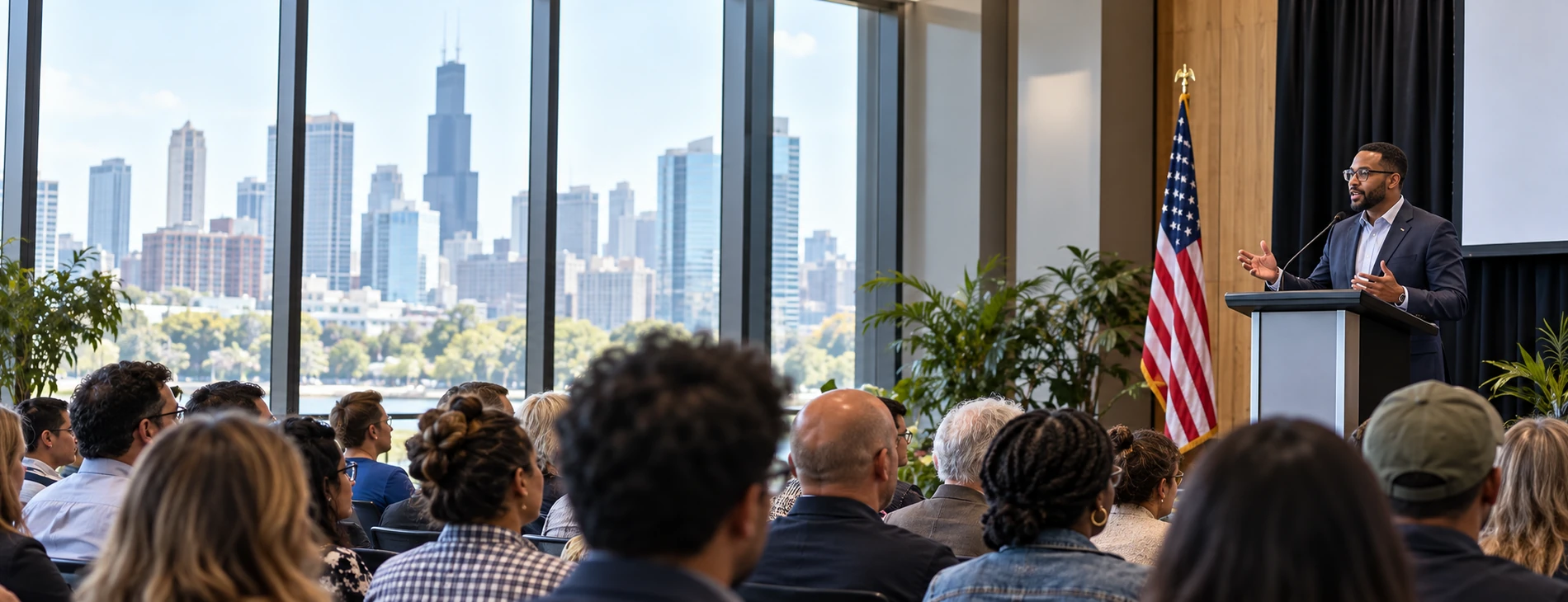
Conferences are structured gatherings that connect speakers, researchers, policymakers, activists, community leaders, and other stakeholders around shared questions. They commonly use keynote speeches, plenary sessions, panel discussions, thematic tracks, networking, and question-and-answer sessions. They help people share evidence and meet counterparts from other institutions.
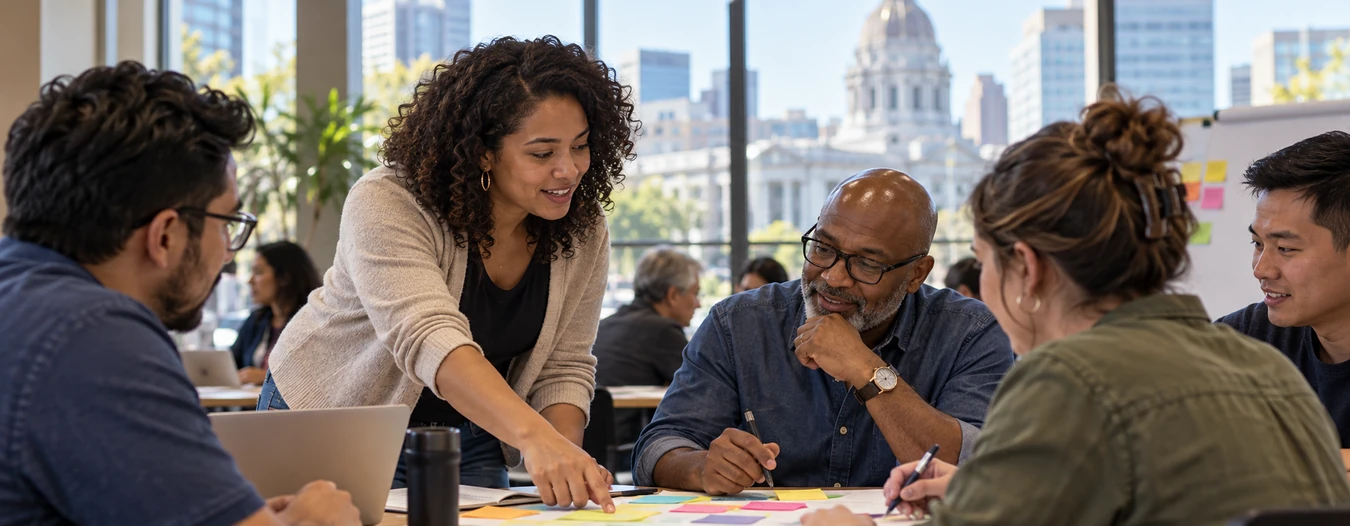
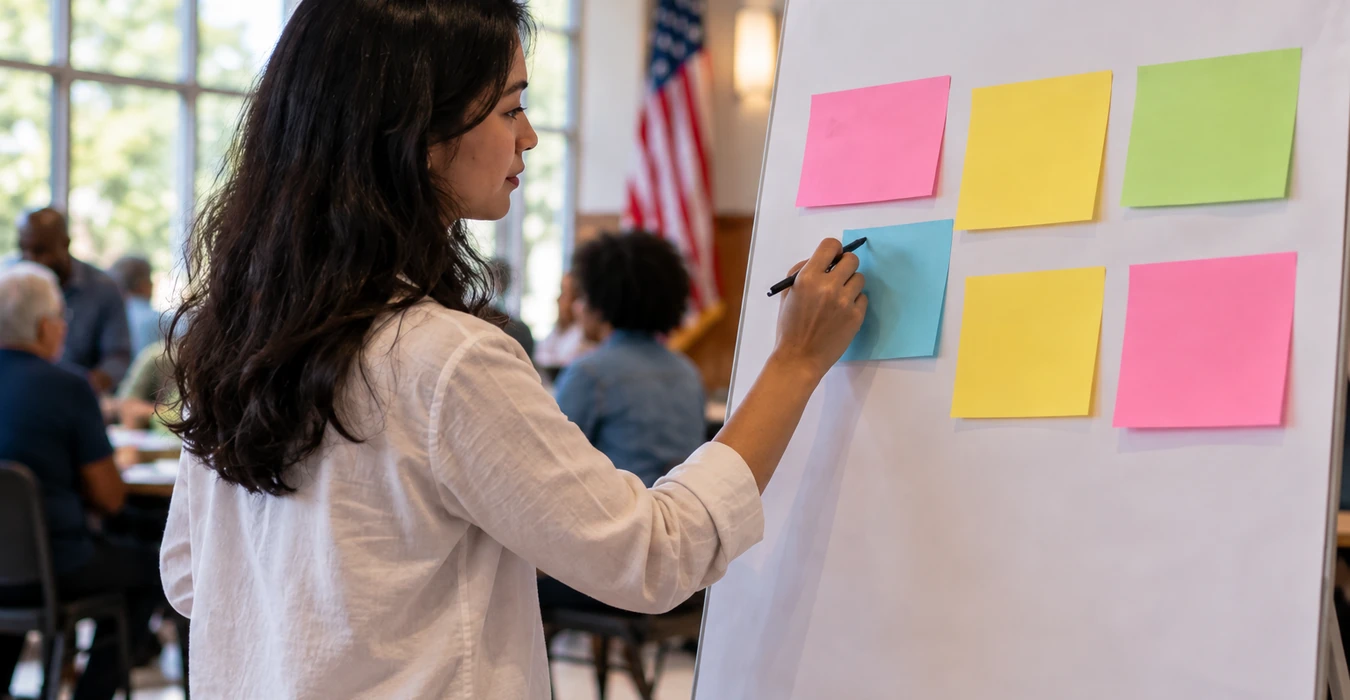
Workshops are smaller, participatory sessions designed to build skills, examine evidence, develop proposals, or solve a defined problem. Facilitators may use stakeholder mapping, brainstorming, breakout groups, role-play, social mapping, and collaborative planning. Participants might leave with a draft action plan, a community needs map, or policy recommendations.
In forums and civic dialogue, both formats serve democratic participation. Citizens and public officials exchange perspectives on local governance, public services, human rights, inclusion, environmental issues, and policy development. A conference can open a debate. A workshop can test what to do next.
Which Civic Event Format Fits the Goal?
| Format | Best suited to | Watch out for | Useful output |
|---|---|---|---|
| Conference or civic forum | Sharing evidence, connecting sectors, setting a public agenda | Too much speaking time and too little participation | Shared priorities and follow-up commitments |
| Interactive workshop | Skills development, co-design, problem-solving | Inviting participants who cannot act on the result | Prototype, training outcome, or action plan |
| Public consultation | Gathering views on a specific policy or service proposal | Unclear influence over the final decision | Documented feedback and an official response |
| Roundtable or policy dialogue | Negotiating among a manageable number of stakeholders | Missing affected or dissenting groups | Agreed next steps or documented disagreements |
| Community meeting | Understanding a neighborhood or small-town concern | Dominance by familiar local voices | Prioritized local needs |
| Citizens’ assembly | Deliberation on a complex public choice | Insufficient time, evidence, or representative selection | Considered recommendations |
| Webinar or hybrid session | Reaching dispersed participants and sharing updates | Connectivity, accessibility, and weak interaction | Recorded questions and accessible resources |
Choose a format based on the decision that needs to change. If residents need to understand a proposal, a public forum may work. If they need to redesign a waste collection route, a facilitated workshop with service providers is more appropriate. If the issue involves conflicting interests, a moderated roundtable may be needed before a larger public event.
How civic dialogue works in the United States
U.S. conferences and workshops should be designed around the decision at stake and who needs to take part. Consider travel, cost, disability access, interpretation, work schedules, caregiving, broadband, and whether remote participants can contribute on equal terms.
A workshop cannot replace required government consultation or approval. A youth workshop on public transport, for example, can generate route-accessibility evidence and proposals; the next step is to submit them through the appropriate local planning or transport channel and ask for a documented response.
Who Needs to Be Involved?
Invite people affected by the issue, people who understand it, and people who can act on the outcome. Depending on the question, participants may include residents, youth representatives, women’s groups, minority communities, persons with disabilities, community leaders, NGOs, researchers, academics, journalists, private-sector partners, public officials, and elected representatives.
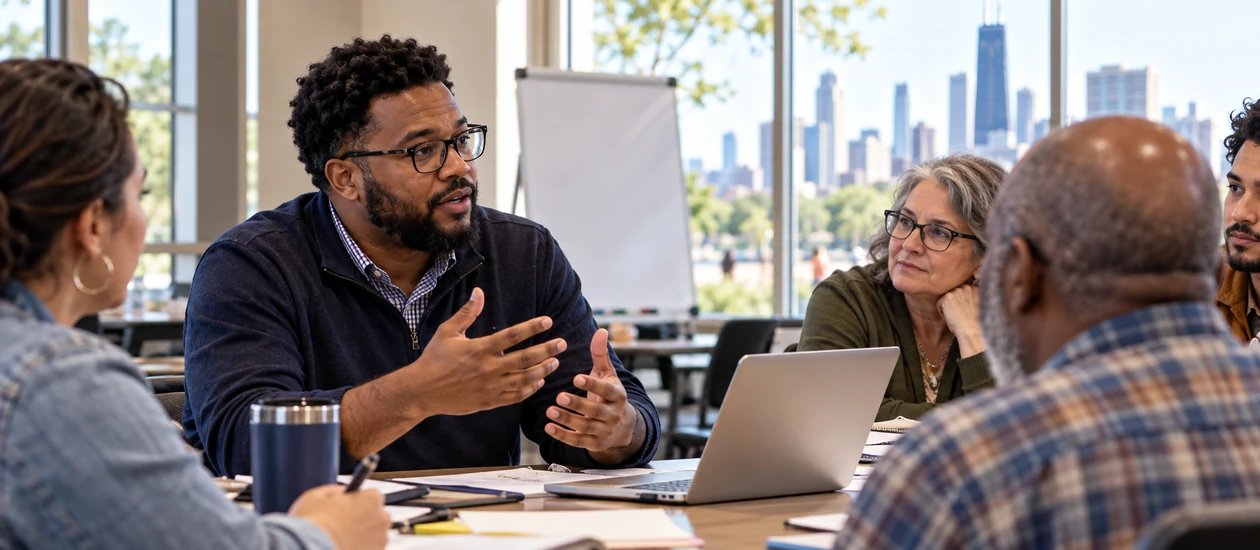
Local authorities, including city, county, and state offices, may provide operational information and clarify public responsibilities. CSOs can mobilize underrepresented communities, support civic education, and independently monitor follow-up. Researchers and subject-matter experts can explain trade-offs and distinguish measured conditions from assumptions. Facilitators and moderators protect the process by distributing speaking time and documenting disagreement rather than manufacturing consensus.
Before sending invitations, ask three questions: Who bears the consequences? Who holds the necessary information? Who can approve or deliver the next step? Missing one group can leave a proposal unworkable or unfair.
From an Agenda to a Decision: A Practical Planning Sequence
1. Define the public problem and the decision boundary
Replace broad objectives such as “promote democracy” with a question participants can address: “Which three changes would make the city or county service-request process easier for residents to use?” Specify whether the meeting will inform, consult, co-design, negotiate, or decide. Be explicit about what organizers can change and what requires a separate government approval.
2. Prepare evidence that participants can challenge
Share a short briefing in accessible language before registration closes. Include the problem, existing policy, available data, budget or resource constraints, known disagreements, and unanswered questions. For local governance topics, social mapping, service records, community surveys, open data, and lived experience may reveal different parts of the same issue. Avoid presenting anecdotal evidence as representative of the whole population.
3. Design participation, not just presentations
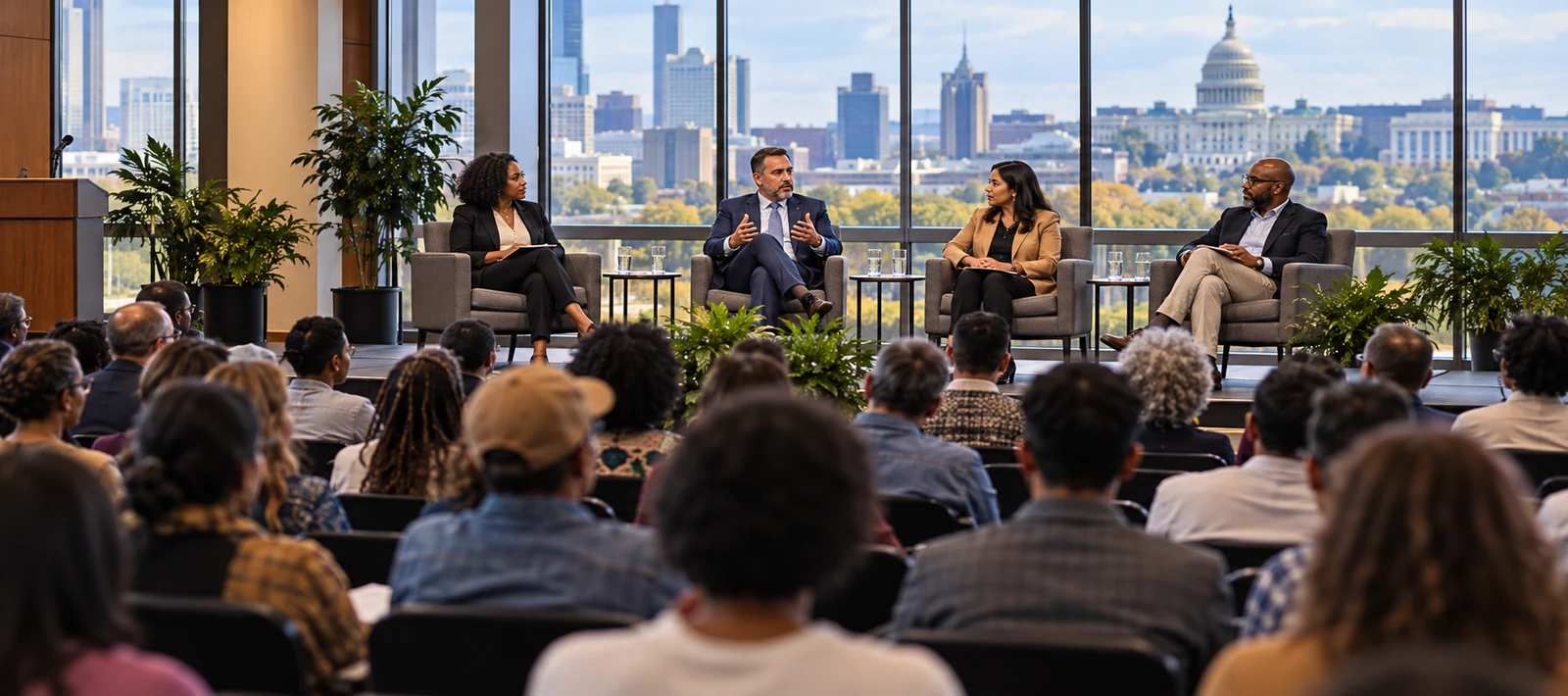
Give each session a job. A keynote speech or expert panel can establish context, but breakout sessions should give participants a defined task. World Café discussions can surface diverse perspectives across rotating groups; CivicLab or policy-lab approaches can support collaborative problem-solving; training sessions can build facilitation, media literacy, digital participation, or advocacy skills. Use anonymous input where public disagreement may expose participants to pressure.
4. Remove barriers to access
5. Capture decisions and disagreements accurately
Record proposals, supporting reasons, objections, unresolved issues, and responsible institutions. Meeting minutes should distinguish a suggestion from a commitment. Do not describe a panel’s view as community consensus unless the participation and decision process justifies that conclusion. Give participants an opportunity to correct the summary.
6. Assign follow-up ownership
Before closing, identify each action item, its owner, target date, required resources, and public reporting method. Where a proposal enters a formal policy process, name the receiving institution and submission route. Without an owner, the proposal may never leave the meeting room.
Example: A Community Waste Management Workshop
Suppose residents report inconsistent waste collection and illegal dumping. A large conference might introduce circular-economy policy and connect environmental organizations, municipal authorities, businesses, and researchers. That can build a coalition, but it will not by itself fix collection schedules.
A focused workshop can bring neighborhood residents, sanitation officials, informal waste workers, women’s groups, and local businesses together. Participants first map collection gaps and dumping locations, then compare possible interventions: clearer schedules, reporting channels, sorting points, or pilot collection routes. The group evaluates feasibility, costs, accessibility, and who might be excluded.
The practical output is a limited pilot proposal with an owner, start date, feedback mechanism, and measurable indicators such as missed collections, complaints resolved, and participation across neighborhoods. A follow-up community meeting checks whether the pilot helped and whether the results justify expansion. The pilot makes the proposal testable.
Common Failures—and How to Detect Them Early
Token participation
People are invited after key choices have already been made. Check: Is there a real decision still open to influence, and will organizers explain which suggestions were accepted or rejected?
Unequal representation
Organizers rely on familiar NGOs or prominent community leaders while overlooking informal workers, remote residents, youth, minority groups, or people with disabilities. Check: Compare the participant list with the groups affected by the decision, not merely with an attendance target.
Consensus without accountability
A facilitator announces agreement even though objections remain. Check: Do the minutes preserve dissenting views and identify issues requiring further consultation?
Digital participation without access
An online event appears inclusive but excludes people with unstable connections or limited data allowances. Check: Can participants submit input asynchronously, by phone, or through a local community partner?
Recommendations without implementation
A report is published but no institution responds. Check: Does each recommendation have a recipient, response deadline, and status that participants can verify?
Measuring Outcomes Beyond Attendance
Registration and participant counts show reach, not civic impact. Evaluation should follow the event’s purpose. For civic education, use a brief before-and-after knowledge check and a later skills application check. For a public consultation, measure the diversity of submissions, response quality, and how input affected the decision. For policy dialogue, track commitments, implementation milestones, and whether unresolved disagreements were addressed.
Track whose views were heard, whether accessibility needs were met, which proposals received official responses, and whether assigned actions were completed. Collect only the personal data needed for evaluation, explain consent, and report aggregate results where possible. Public trust cannot be inferred from a satisfaction survey alone.
Recommended Resources
For guidance on public forums and local participation, see the Community Tool Box guide to public forums and the National Civic League principles for public engagement.
Frequently Asked Questions
A civic forum primarily creates space for public discussion and exchange among citizens and institutions. A workshop is designed for active learning or collaborative work on a defined task. A single event can include both.
It can contribute evidence, proposals, and stakeholder feedback, particularly when connected to an appropriate public consultation or planning process. Influence is not automatic: organizers need to identify the responsible institution, formal submission route, and follow-up mechanism.
There is no universally correct number. A hands-on design session needs manageable groups and enough facilitation; a conference can accommodate a wider audience. Representation, meaningful speaking opportunities, and the decision task matter more than maximizing attendance.
A concise summary of discussion, recommendations and dissent, action owners, expected dates, and instructions for checking progress. Where appropriate, publish accessible minutes and a status update without disclosing sensitive personal information.
They can work for training, knowledge exchange, and structured consultation, but effectiveness depends on connectivity, facilitation, accessibility, and the task. Sensitive negotiations or collaborative mapping may benefit from in-person or carefully designed hybrid sessions.
Read Similar Articles
How grassroots organizers converged in Atlanta (2007), Detroit (2010), and 2015 to create a nationwide space for social movements.
Learn More
The PMA model: turning deliberative dialogue into collective governance, grassroots resolutions, and joint movement strategy.
Learn More