U.S. Social Forum History: How Grassroots Movements Built a Space for Civic Dialogue
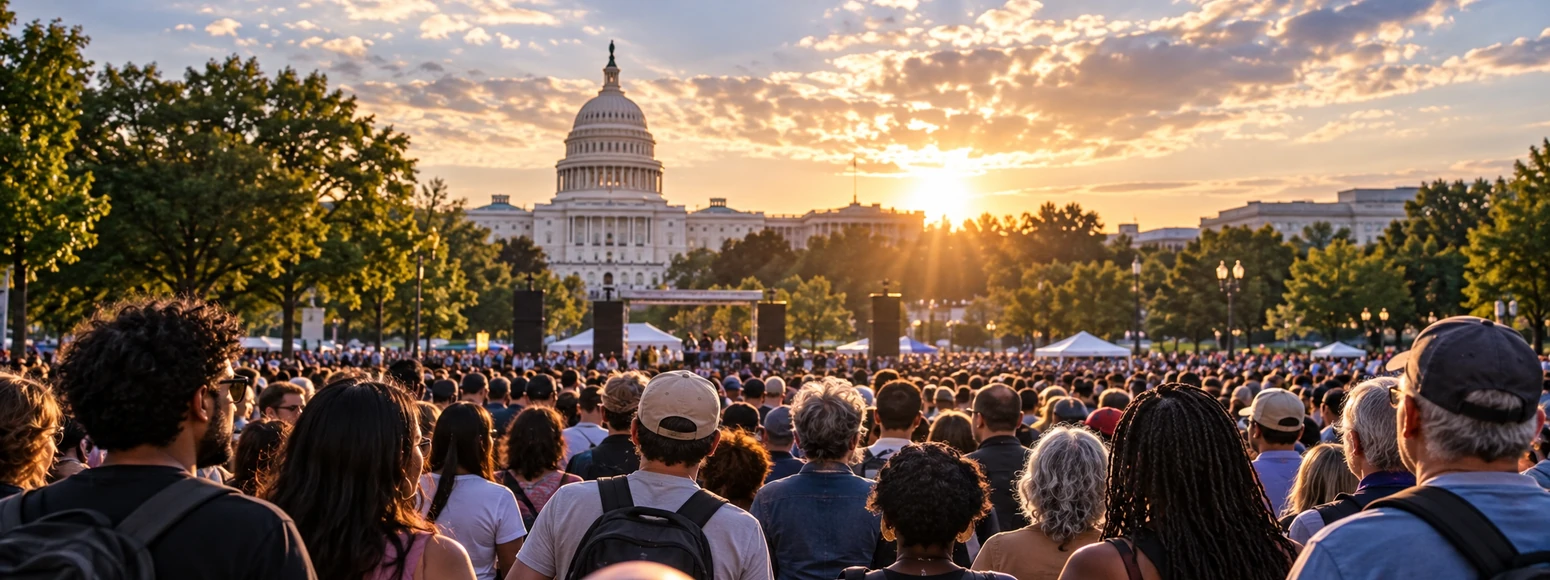
The United States Social Forum (USSF) emerged as a nationwide meeting place for grassroots organizations that rarely had the opportunity to plan together. Its landmark gatherings took place in Atlanta in 2007, Detroit in 2010, and across multiple locations, notably Philadelphia and San Jose, in 2015. Inspired by the World Social Forum, the USSF was not a government consultation, political party convention, or online discussion board. Its purpose was to connect movements, develop shared strategies, and turn public discussion into collective action.
The forum’s lasting contribution was a practical one: people dealing with housing loss, discrimination, low wages, and environmental harm could meet others facing related problems. They could compare organizing methods and decide whether to work together. A gathering alone could not guarantee those relationships would last.
Key dates in U.S. Social Forum history
| Year | Location or process | Why it mattered |
|---|---|---|
| 2001 | World Social Forum, Porto Alegre, Brazil | Established an influential international model for movement-led dialogue. |
| 2005 | U.S. National Planning Committee | Coordinated the work needed for a national convergence. |
| 2006 | Southeast Social Forum, Durham, North Carolina | Helped build regional capacity ahead of Atlanta. |
| June 27–July 1, 2007 | Atlanta, Georgia | First national USSF; introduced the People's Movement Assembly as a collective-action process. |
| June 22–26, 2010 | Detroit, Michigan | Second national USSF; expanded assemblies and cross-movement collaboration. |
| 2015 | Philadelphia, Pennsylvania; San Jose, California; related regional gatherings | Experimented with a polycentric rather than single-city format. |
Where did the U.S. Social Forum come from?
The World Social Forum (WSF) began in Porto Alegre in 2001 amid opposition to neoliberal globalization and the idea that economic decisions should be made only by powerful institutions. Its well-known proposition, “Another world is possible,” offered a starting point rather than a uniform program. The World Social Forum Charter of Principles framed the process as an open meeting space for civil society groups, not a body speaking with one political voice.
U.S. organizers adapted the international model rather than reproducing it. Grassroots Global Justice and allied networks advanced plans for a national gathering. A National Planning Committee coordinated participating organizations. Project South, based in Atlanta and experienced in popular education and Southern organizing, became a key local anchor. The Southeast Social Forum in Durham in 2006 helped prepare for the larger 2007 event.
Atlanta also placed the gathering close to urgent Southern struggles. Hurricane Katrina had exposed displacement and racial inequality along the Gulf Coast. Civil-rights and labor organizing shaped the region’s political history. Those experiences influenced whose concerns organizers wanted at the center: Black, Indigenous, immigrant, working-class, and other frontline communities.
Atlanta 2007: the first United States Social Forum
From June 27 to July 1, 2007, approximately 20,000 participants converged in Atlanta, according to retrospective accounts by Project South. Marches, workshops, cultural events, caucuses, and conversations brought together groups working on racial justice, labor rights, housing, immigrant rights, Indigenous sovereignty, gender justice, and environmental protection. Participation estimates vary by source and should be read as approximate, not audited attendance totals.
Project South served as an anchor organization alongside national and regional partners. Organizers including Jerome Scott, Walda Katz-Fishman, Stephanie Guilloud, and Emery Wright are connected to the institution's history and reflections on the event. A widely recalled solar-powered hip-hop performance, supported by the Indigenous Environmental Network, illustrated how culture and environmental practice could become part of movement organizing rather than entertainment added after the serious discussions.
Atlanta mattered for more than its attendance. Participants could take an idea from a workshop into a caucus or assembly and meet groups working on the same issue elsewhere. Whether those connections produced later campaigns depended on what happened after people went home.
Why the People's Movement Assembly mattered
The People's Movement Assembly (PMA) emerged at the 2007 gathering as a way to move beyond separate workshops. Associated with organizer Ruben Solís, then of the Southwest Workers Union, the approach invited participants to identify shared problems, deliberate across differences, and make commitments that could continue after the forum ended. The first assembly was imperfect, as organizers later acknowledged, but it introduced a durable question: what happens after people agree that change is necessary?
Detroit 2010: from convergence to shared strategy
The second USSF met in Detroit from June 22 to 26, 2010. Detroit's experience with deindustrialization, foreclosure, economic inequality, and community-led organizing made it a consequential setting. Project South identified local anchor organizations including the Michigan Welfare Rights Organization, East Michigan Environmental Action Council, Centro Obrero, and Southeast Michigan Jobs with Justice.
People's Movement Assemblies became more developed in Detroit. Project South's institutional history reports coordinating more than 100 PMAs associated with the second forum, while other accounts count a smaller subset held during the event itself. These numbers reflect different definitions and time frames, so they should not be treated as contradictory totals for one identical activity. The process contributed to a National Social Movement Agenda, intended to synthesize discussion and guide action beyond the gathering.
Researchers Christopher Chase-Dunn and Ian Breckenridge-Jackson compared participant surveys from Atlanta and Detroit to examine connections among social movements. Their research found overlapping participation across movement issues, while also cautioning that attendee surveys do not automatically represent every participant. Another academic analysis of the Boston Freedom Rides delegation suggested that the 2010 forum strengthened networks and capabilities, with effects more evident within some movement sectors than across all of them. That is a more defensible legacy claim than saying the USSF united every U.S. social movement.
2015: why the forum changed its format
The third USSF in 2015 departed from the earlier single-city model. Major convergences took place in Philadelphia and San Jose, alongside connected gatherings and actions elsewhere, including Southern movement organizing around Jackson, Mississippi. This polycentric structure acknowledged a persistent problem: a single national destination can be costly and difficult for grassroots participants to reach.
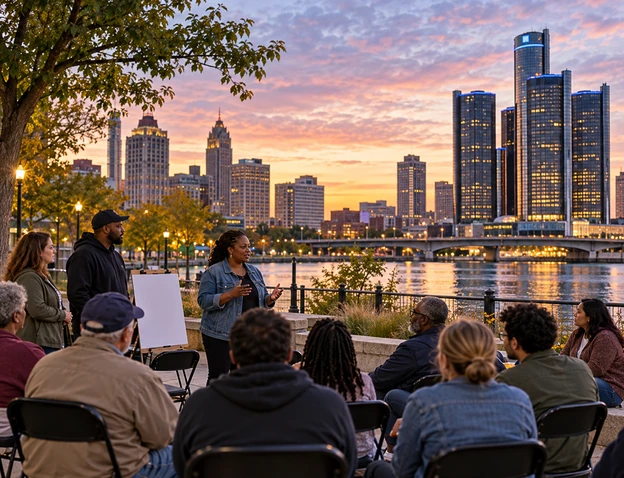
The format also reflected the diversity of movements involved. The 2015 discussions included the commons, food systems, housing, economic democracy, environmental justice, and just transition. WhyHunger documented participation and discussion of reclaiming the commons; Cooperation Jackson and the Climate Justice Alliance were part of the wider ecosystem of Southern and climate-justice organizing. These connections do not mean that every named organization governed the whole forum.
Decentralization offered greater local relevance but introduced trade-offs: less face-to-face contact across all regions, more complex coordination, and difficulty producing a common national agenda. The 2015 experiment is therefore best understood as an organizational adaptation, not straightforward evidence that one format was universally better.
How civic dialogue worked inside the USSF
The USSF's distinctive contribution was its movement-building process. Unlike a public hearing, where officials typically set the agenda and residents respond, the social forum sought to let participants set priorities. Unlike an electoral convention, it did not nominate candidates or claim to represent everyone through a single platform. And unlike an online forum, its central work depended on sustained relationships, facilitated meetings, and local organizing.
- Convene: bring together community groups, unions, Indigenous organizations, immigrant-rights networks, youth organizers, and other constituencies.
- Exchange: use workshops, plenaries, caucuses, cultural activities, and popular education to compare lived experience and strategies.
- Deliberate: use People's Movement Assemblies to identify common priorities and disagreements.
- Commit: formulate actions, relationships, and organizing plans that participants can pursue locally or across regions.
- Verify: assess whether the plans led to continuing assemblies, campaigns, organizational ties, or changes in local practice.
Organizations, people and movements in the wider network
The USSF was a networked process rather than the project of one organization. Grassroots Global Justice, Project South, the National Planning Committee, regional organizing committees, and local host organizations played different roles over time. The National Domestic Workers Alliance, Indigenous Environmental Network, and Southwest Workers Union represent issue-based organizing currents connected to the wider movement landscape. Universidad Sin Fronteras and Ruben Solís are associated with subsequent PMA work.
Grassroots Global Justice organizer Michael Leon Guerrero and scholars Jackie Smith, Jeffrey Juris, Christopher Chase-Dunn, and Ian Breckenridge-Jackson appear in different parts of the USSF record. The researchers studied social forum organizing and movement networks; they were not a single forum leadership team.
Across the network, campaigns addressed racial and economic justice, immigrant rights, Indigenous sovereignty, labor, housing, environmental justice, popular education, and solidarity economies. Differences in resources and political priorities still complicated joint work.
What did the U.S. Social Forum actually achieve?
The USSF brought grassroots organizations into sustained contact and gave the People’s Movement Assembly a wider audience. Some groups developed relationships and shared strategies beyond individual gatherings. The scale of those effects varied across movements and locations.
Those outcomes have limits. The USSF was not a legislative institution and could not enact binding policy. Attendance estimates and numbers of assemblies are not measures of social change. Funding constraints, unequal access to travel, coordination burdens, and disagreements among organizations limited what a national convergence could deliver. Some later movements shared participants and ideas with the USSF, but shared personnel alone does not prove that the forum caused those movements to emerge.
U.S. Social Forum History
The U.S. Social Forum offers organizers a U.S. example of movement-building across regions and issue areas. Assess whose voices are included, how decisions are made, and what organizing continues after a large gathering.
The transferable lesson is a design question: who sets the agenda, who can afford to participate, and what happens after the meeting? A national gathering may build visibility, while distributed regional gatherings can lower travel barriers for residents across a large and geographically diverse country. Accessibility, interpretation, facilitation, shared communication, and transparent follow-up matter in either format; test whether the format improves representation rather than assuming that it does.
The U.S. Social Forum offers organizers a U.S. example of movement-building across regions and issue areas. Assess whose voices are included, how decisions are made, and what organizing continues after a large gathering.
Frequently Asked Questions
It was inspired by and connected to the broader World Social Forum process, but its national organizing structures and U.S. priorities were distinct. The international forum began in Porto Alegre in 2001.
The first national gathering took place in Atlanta, Georgia, from June 27 to July 1, 2007.
Detroit brought struggles over jobs, housing, economic restructuring, and community self-determination into direct contact with national movements. Local organizations anchored the gathering.
Yes. Its third iteration used a multi-location or polycentric model, with major gatherings in Philadelphia and San Jose and connected organizing elsewhere.
No. It was a grassroots civic and social-movement process, organized through networks of civil-society groups and face-to-face assemblies rather than a government agency or conventional web discussion platform.
The major national gatherings commonly identified in its history are 2007, 2010, and 2015. That does not mean every organization, assembly, or relationship created through the process ended in 2015; subsequent activity must be assessed by specific network or initiative.
Read Similar Articles
The PMA model: turning deliberative dialogue into collective governance, grassroots resolutions, and joint movement strategy.
Learn More
Methodologies for facilitating popular education workshops and large-scale democratic convenings that lead to measurable action.
Learn More