People's Movement Assemblies: Turning Community Dialogue into Collective Action
Forums & Civic Dialogue
Residents can agree that flooding, unsafe work or rising rents need attention and still leave a meeting without knowing who will act. A People's Movement Assembly (PMA) tackles that gap. People affected by a problem investigate its causes, agree on a direction and take responsibility for the next steps. A crowded room is not the result; a workable plan is.
What is a People's Movement Assembly?
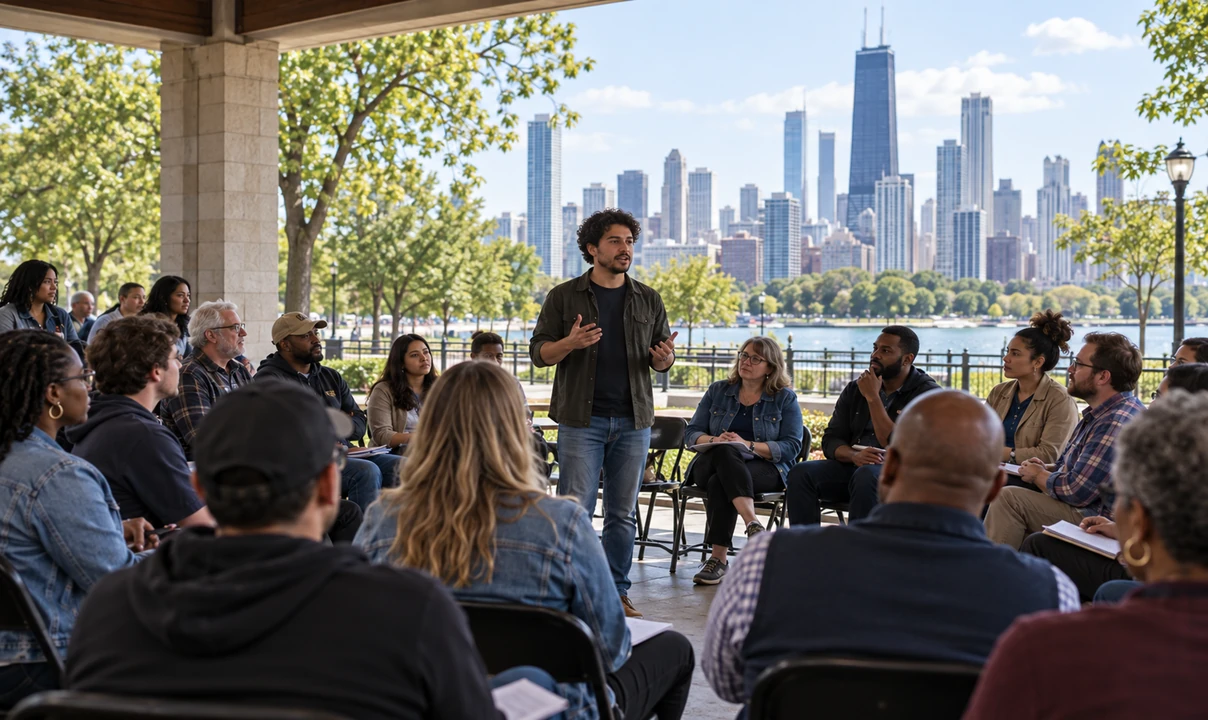
A People's Movement Assembly is a participatory process used in grassroots organizing and movement building. It brings community members, workers, organizers, and allied groups together to identify structural problems and shape collective responses. PMAs are associated with the organizing methodology documented by Project South and the United States Social Forum's assembly guide.
A public consultation usually asks residents to comment on a proposal already on the table. A PMA can begin earlier: participants choose the issue, identify who has the power to change it and decide how to organize. The outcome might be a resolution for action, a working group or a campaign. No single outcome is required.
A citizens' assembly may recruit members by lottery to weigh policy options; a neighborhood meeting may simply share updates. Neither necessarily follows the PMA approach of political education, collective visioning and action.
When is a PMA the right forum?
Use a PMA when the problem affects several communities, people most affected have little influence over decisions, and participants are ready to work together afterward. Housing justice, labor rights, public safety, food sovereignty and climate justice are possible agendas, not a compulsory checklist.
It may be the wrong tool when organizers need only to announce a decision, gather quick survey responses, or resolve a narrow technical issue. An assembly also cannot replace a legally mandated hearing, an election, or a formal government decision. Its influence depends on who participates, how decisions are made, and what collective leverage participants can build.
| Format | Primary purpose | Typical outcome |
|---|---|---|
| Town hall | Ask officials questions and raise concerns | Public feedback and responses |
| Public consultation | Inform an institution's proposal | Recommendations or submissions |
| Deliberative citizens' assembly | Consider evidence and weigh policy choices, often through selected membership | Policy recommendations |
| People's Movement Assembly | Build collective analysis, vision, and organizing capacity | Resolutions, working groups, campaigns, or joint action |
A coalition might draft demands at a PMA, then take them to a city consultation. The two meetings do different jobs.
Where the movement assembly tradition comes from
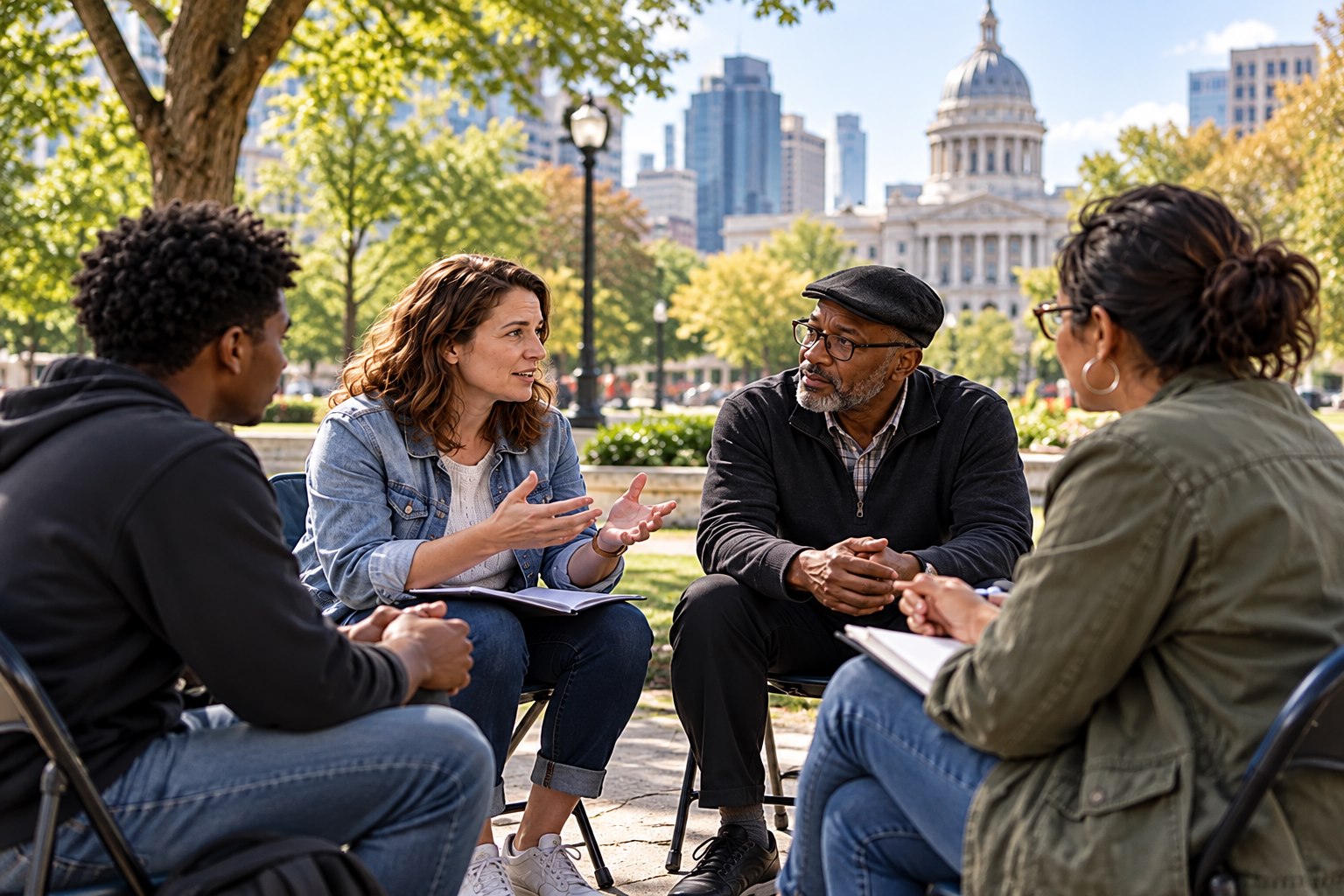
The PMA process developed within social justice organizing in the United States, drawing on popular education, participatory democracy, and the broader social forum movement. Project South, based in Atlanta, helped document and advance the approach. The United States Social Forum (USSF), including its 2007 gathering in Atlanta and 2010 gathering in Detroit, provided important spaces for movement organizations to connect local struggles with broader strategies. The World Social Forum (WSF) forms part of that wider international context, although it should not be treated as the organizer of every local PMA.
The Southern Movement Assembly and organizing networks in the Gulf South show how political education can feed longer campaigns. A PMA in Los Angeles or Atlanta need not follow the same rules or endorse the same demands.
Examples such as the Los Angeles People's Movement Assembly, public-safety organizing in Atlanta, and the Katrina 20 People's Movement Assembly agreements show different applications of the approach. These are specific initiatives, not evidence that every PMA uses identical procedures or achieves the same outcomes.
The three-part process: consciousness, vision, strategy
The United States Social Forum (USSF) guide organizes the work around consciousness, vision and strategy. Groups may circle back when new evidence or disagreement changes their understanding.
1. Build shared consciousness through root-cause analysis
Participants begin with lived experience: whose rent is rising, whose workplace is unsafe, whose rural community faces flooding, or who cannot access public services. Facilitators then help the group distinguish immediate symptoms from the systems producing them. Political education and popular education can connect personal testimony to policy, budgets, land ownership, labor conditions, and historical exclusion.
Ask what would keep causing the problem after the most visible incident had been fixed. The answer often points to the policy or institution that an action plan must address.
2. Create a collective vision
Once participants understand the causes, they describe what a different future would look like. A vision should be concrete enough to guide choices: affordable and secure housing, community-defined public safety, access to clean water, or dignified work. Facilitation should make room for disagreement, especially between groups whose priorities or resources differ.
3. Translate vision into strategy
Strategy is where a promising discussion either becomes organizing or stalls. Name the decision-maker, allies, available resources, first action, person responsible and review date. A resolution without owners or follow-up is only a statement.
How to organize a People's Movement Assembly
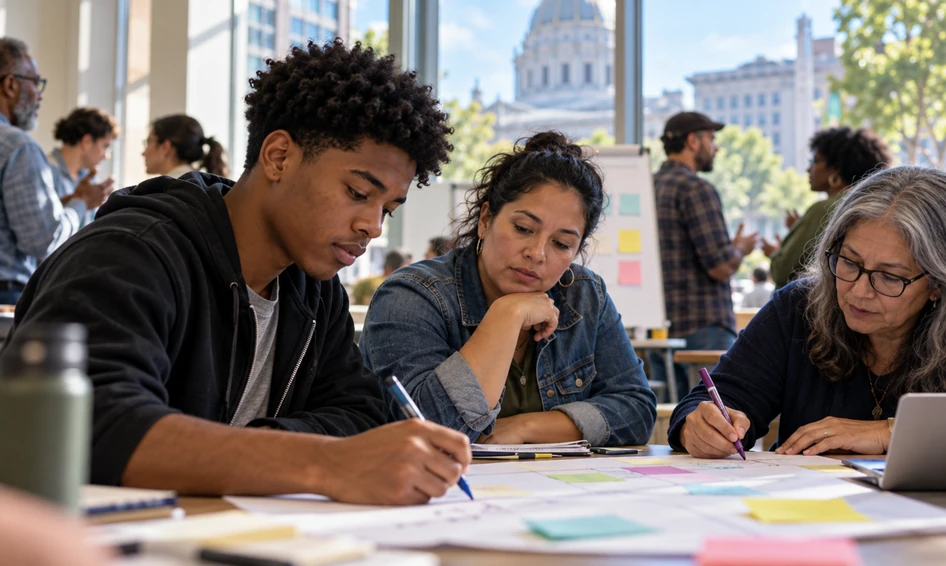
- Define the shared problem. Write a one-sentence purpose that affected residents can recognize. Avoid an agenda so broad that no decision is possible.
- Build an organizing circle. Invite neighborhood groups, workers, youth, women's organizations, disability advocates, and other directly affected constituencies. Map who is missing before invitations go out.
- Choose an accessible format. Consider a neutral venue, transport, childcare, interpretation, prayer schedules, accessible entrances, remote participation, and safe ways to contribute without speaking publicly.
- Agree on decision rules. Decide whether the assembly will seek consensus, use a vote, record multiple positions, or delegate drafting to a working group. State clearly who can decide and how objections will be handled.
- Prepare evidence and lived testimony. Combine community experience with relevant documents, budgets, environmental data, or local regulations. Make uncertain claims distinguishable from verified facts.
- Facilitate in small groups. Use time limits, accessible questions, and rotating facilitators. Small-group discussions can reduce domination by confident speakers; report-back sessions help surface common ground and unresolved conflicts.
- Draft decisions in public. Record the problem, proposed action, responsible team, resources needed, and a realistic review date. Do not imply unanimous support when it does not exist.
- Publish and follow through. Share accessible minutes and a contact route, protect sensitive information, and schedule the next accountability meeting before people leave.
A practical 150-minute agenda
| Time | Activity | Expected output |
|---|---|---|
| 15 minutes | Welcome, purpose, participation rules | Shared expectations |
| 30 minutes | Testimony and root-cause mapping | Priority causes |
| 25 minutes | Small-group visioning | Desired changes |
| 35 minutes | Strategy groups | Proposed actions |
| 30 minutes | Report-backs and decision process | Agreed or contested proposals |
| 15 minutes | Responsibilities and follow-up | Owners and review date |
This 150-minute schedule is one option. Interpretation, accessibility needs or sensitive testimony may require several meetings.
What a useful resolution for action looks like
A U.S. people's assembly can bring residents and organizations together to document a shared problem, compare proposals, and assign advocates to follow up. It can influence public decisions through hearings, agency consultations, elected representatives, or participatory-budgeting processes where available, but it cannot bind officials unless governing rules give it that authority.
Residents will form an open flood-response working group, document recurring flood locations with consent, request a public meeting with the relevant local authorities, and report progress to the community within 30 days.
For this proposed resolution, check: was a working group formed, were locations documented with consent, was a meeting requested, and did residents hear back within 30 days? Assigning names and a fallback plan would make it stronger.
Housing justice, environmental justice, racial justice, economic justice, cooperative economics and mutual aid may also lead to resolutions. Choose demands that participants can actually pursue; an ambitious list without capacity is not a strategy.
How community assemblies can influence public decisions
A U.S. people's assembly can bring residents and organizations together to document a shared problem, compare proposals, and assign advocates to follow up. It can influence public decisions through hearings, agency consultations, elected representatives, or participatory-budgeting processes where available, but it cannot bind officials unless governing rules give it that authority.
Connecting assemblies with formal decision-making
Use the languages participants understand. If a dispute concerns land, labor or public safety, decide in advance whether names, photographs and testimony should be recorded at all. Public minutes can put people at risk.
Who should participate—and who might be left out?
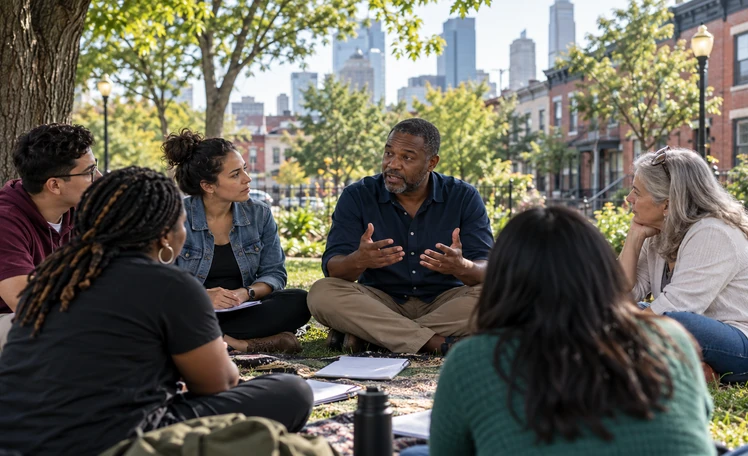
An open invitation is not the same as access. Childcare costs can exclude women with care responsibilities; shifts can exclude informal workers; travel and inaccessible rooms can exclude rural residents and people with disabilities. Youth and migrant communities may face different barriers. Ask those groups what would make attendance possible before setting the venue and time.
Before inviting speakers, map who lives with the consequences, who controls resources and whose absence would skew the discussion. Afterward, examine whose proposals survived and who received responsibility. That is a better test of community empowerment than equal speaking time alone.
Tell participants whether the meeting is public, how personal information will be handled and whether attending counts as endorsing a resolution. Record dissent. Collective decisions do not erase minority views.
Common failure points and how to test progress
- The same organizations dominate every session.
- Compare the participant map with the population affected by the issue. Change outreach channels and facilitation roles before claiming broad community representation.
- Dialogue produces no decisions.
- Require each strategy group to propose an action, a responsible person or team, and a date. Record unresolved questions instead of disguising them as agreement.
- Resolutions exceed available capacity.
- Rank proposals by urgency, likely impact, resources, and willingness to act. Start with a manageable commitment while preserving longer-term ambitions.
- Organizers confuse attendance with impact.
- Track whether tasks were completed, new constituencies joined, decision-makers responded, and affected residents experienced meaningful changes. Attendance alone measures reach, not success.
- Safety concerns suppress honest discussion.
- Provide confidential feedback routes, obtain consent before publication, and avoid publicizing sensitive identities or accusations without appropriate safeguards.
Review progress after 30 or 60 days. Count actions with named owners, completed tasks, responses from institutions and unresolved concerns raised by underrepresented groups. These figures track follow-through; they do not prove that the assembly caused a wider social change.
Examples of movement assembly approaches
Los Angeles People's Movement Assembly: Its published organizing materials show an ongoing local initiative rather than a one-off public meeting. Consult the group's own account for its specific approach.
Atlanta public-safety discussions: Local reporting describes residents debating what public safety should mean and whose priorities it should reflect. Those discussions cannot stand in for evidence about every city's outcomes.
Katrina 20 People's Movement Assembly: Ten published movement agreements address collective care, mutual aid, solidarity, cooperative economics and climate sustainability. The agreements record commitments; implementation requires further work.
The People's Coalition for Safety and Freedom, Anti Police-Terror Project and regional movement networks also use assembly-related practices. The Southwest Workers Union, Solidarity Research Center, Southern Movement Committee and Community to Community belong to distinct organizing contexts. They are not branches of a single PMA authority.
Frequently Asked Questions
No. A PMA is a participatory organizing process, not a political party. Participants may hold different political positions, and individual assemblies may adopt particular demands.
A community group can convene an assembly-style process, but credibility depends on transparent purpose, meaningful participation by affected people, clear decision rules, and the ability to follow through. Using the PMA name does not by itself establish community legitimacy.
Not necessarily. Some groups pursue consensus; others use voting or record multiple positions. The method should be agreed in advance, with dissent accurately documented.
Check who participated, what was assigned, which actions were completed and whether residents can verify a response or change. Attendance and unanimous statements alone say little about follow-through.
Read Similar Articles
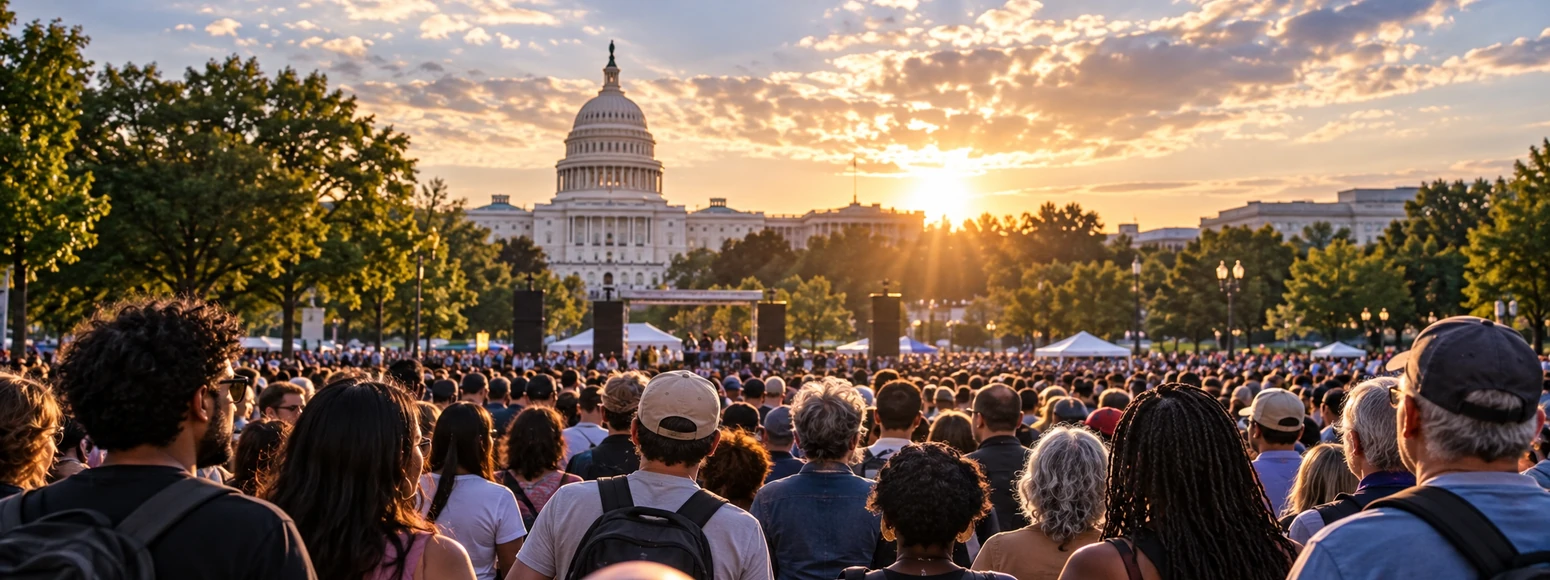
How grassroots organizers converged in Atlanta (2007), Detroit (2010), and 2015 to create a nationwide space for social movements.
Learn More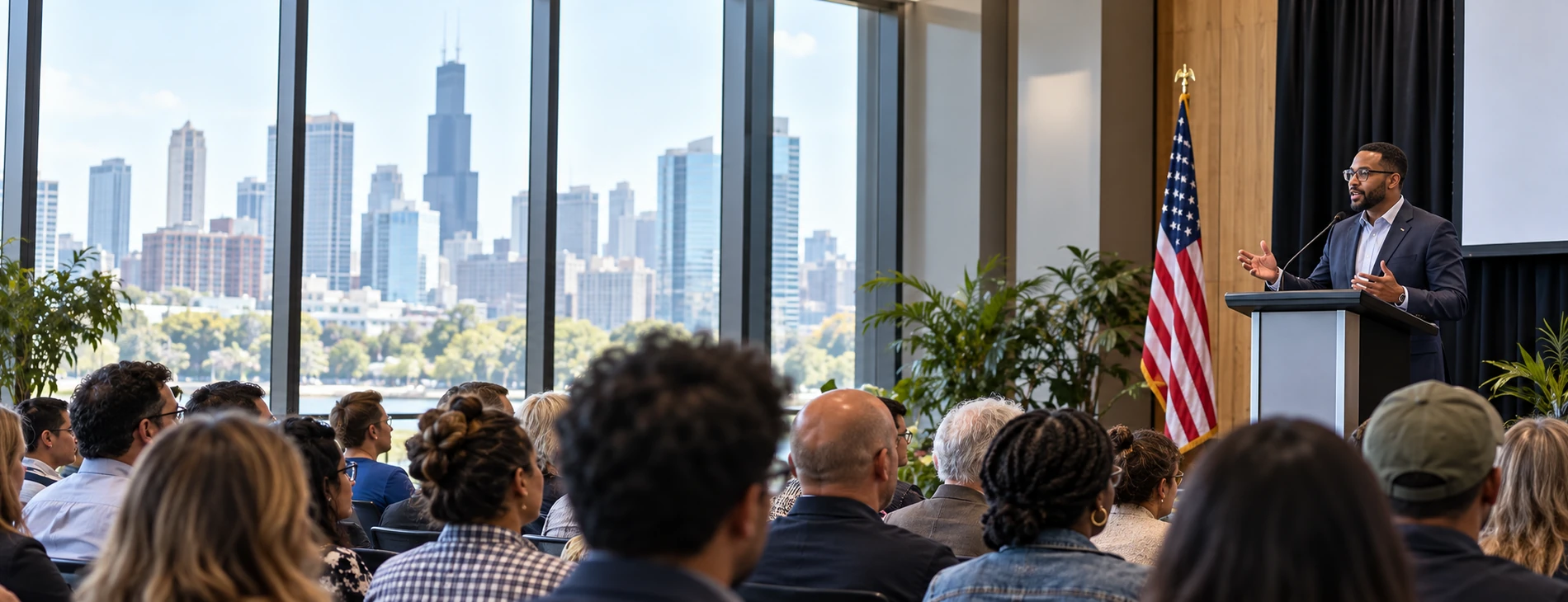
Methodologies for facilitating popular education workshops and large-scale democratic convenings that lead to measurable action.
Learn More