Public Campaigns in the United States
Campaigns can focus on a local service, a school policy, a state rule, or a federal decision. The right route depends on who controls the decision and when public input is accepted.
What is a public campaign?
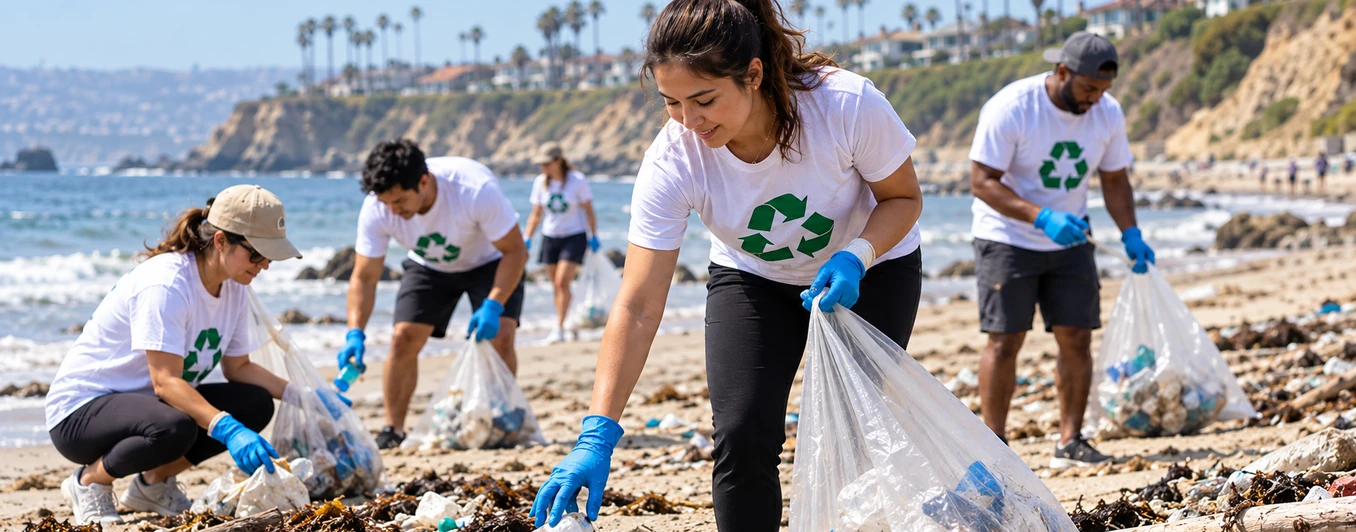
A public campaign combines messages and activities to inform people, invite participation, change behavior, raise resources or seek a public decision. Organizers include residents, community-based organizations (CBOs), civil society organizations (CSOs), nonprofits, NGOs, youth groups, local government and coalitions. A workable campaign identifies the issue, audience, objective, timeline, call to action (CTA) and evidence needed to judge the result.
In grassroots campaigns, residents help define the problem and choose the response. Community engagement means listening, making decisions together and reporting back, not merely collecting signatures or reactions. Advocacy seeks an institutional decision; awareness work addresses what people know; service campaigns organize direct help. A project may do all three, but each needs a separate measure of success.
Choose the campaign type by the change you need
| Type | Best suited to | Useful outcome measure |
|---|---|---|
| Public awareness | People lack reliable information | Knowledge change from a short before-and-after survey |
| Grassroots organizing | Residents need collective capacity | Active volunteers and completed local actions |
| Community engagement | Decisions need resident input | Diverse participation and documented responses |
| Public advocacy | An institution controls the decision | A formal response or recorded policy change |
| Fundraising or resource drive | A practical project lacks resources | Verified funds or in-kind contributions delivered |
| Public health or environmental action | A defined practice needs improvement | Observed behavior or service change |
If the problem is misinformation, start with awareness. If neighbors know the problem but cannot act together, organize locally. If an official controls the solution, identify the decision and pursue advocacy. A petition will not staff a missing waste-collection service; video views will not establish changed behavior.
Start with a community-defined problem, not a slogan
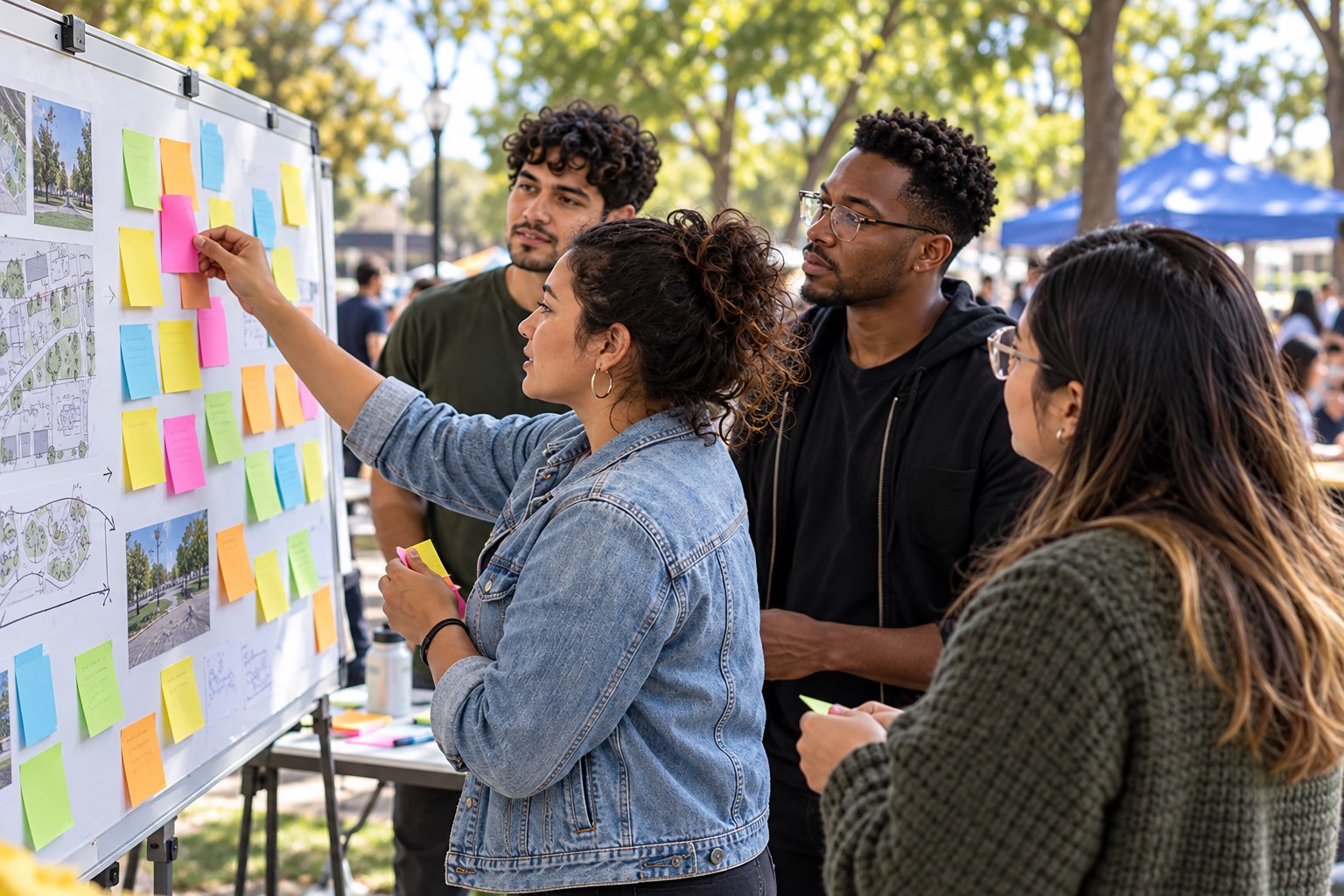
Before making posters, ask affected residents what happens, where and how often. Check available records. Overflowing bins, for instance, might point to missed collections, inadequate disposal facilities, poor sorting or unclear responsibility. Each cause calls for a different campaign.
Use interviews, public records, service requests, and dated observations to understand what is happening and who is most affected. Let residents help define the problem and describe the change they want.
Invite women, young people, older residents, disabled people, low-income households and residents without reliable internet. Check whether the time, venue, language, travel cost or privacy arrangements keep anyone out. A packed meeting can still miss the people most affected.
How to plan a public campaign step by step

1. Define the outcome and a realistic boundary
Set a measurable outcome, a realistic time frame, and an owner for each task. Separate what volunteers can deliver from what an agency or elected body must authorize.
2. Identify the audience and decision-maker
Audience segmentation helps separate affected households, prospective volunteers, community partners, donors, media outlets, and officials. Each group needs a different request. Residents may be asked to test a new sorting routine; a service provider may need to confirm a collection schedule; a local official may need to review a proposal. State who can say yes, what authority they have, and what evidence they require.
3. Build a theory of change and action plan
A simple theory of change connects activities to results: listening sessions reveal barriers; a small pilot tests a practical response; volunteer training supports implementation; collection records and resident feedback indicate whether the pilot works; documented results inform a decision to continue or expand. Assign each activity an owner, resource requirement, campaign milestone, and risk. Set a campaign budget for printing, transport, accessibility, meeting facilities, data collection, and follow-up—not just digital advertising.
4. Select outreach channels that residents actually use
Combine online and offline outreach instead of assuming one channel reaches everyone. Opt-in text-message groups, neighborhood email lists, Facebook or Instagram pages, short videos, newsletters, and a campaign website can share updates; flyers, local radio, school networks, door-to-door canvassing, and face-to-face meetings can reach residents who are less active online. Obtain permission before adding people to messaging groups or publishing their photos. A landing page should explain the issue, the requested action, the organizer, and how to contact the team.
5. Recruit and support volunteers
Volunteer recruitment works better when tasks are specific: two hours of survey collection, translating a flyer, recording attendance, preparing a community workshop, or managing event logistics. Provide volunteer training, safety guidance, accessible instructions, and a contact for concerns. Track volunteer retention and workload, not just sign-ups. Community leaders should share responsibilities so the campaign can continue when one organizer becomes unavailable.
6. Launch a small, observable action
A community meeting, town hall, focus group, local cleanup, petition, public consultation, or neighborhood workshop can be an effective starting point when it matches the objective. Public demonstrations and peaceful rallies are different tactics with distinct safety and legal considerations; check applicable requirements before organizing them. For a service pilot, start with a manageable group and gather baseline observations before expanding.
7. Close the feedback loop
Publish what participants proposed, what was accepted, what was rejected, why, and who will follow up. Use a community feedback loop through meeting notes, noticeboards, messaging updates, and a named contact. Residents should be able to correct inaccurate summaries and raise concerns without retaliation. This accountability step is often more important to long-term trust than another publicity push.
Public planning and local participation in the United States

A campaign file for a hearing or planning meeting can include a one-page request, a map of affected locations, supporting records, a resource estimate, and statements gathered with consent.
After the meeting, share a plain-language recap, record commitments, assign follow-up, and tell participants how to submit evidence or track the decision.
A useful campaign file for a planning forum contains a one-page problem statement, affected locations, dated observations, a realistic proposal, estimated resources, signatures or documented support collected with consent, and contact details for follow-up. Keep a record of the proposal reference number or meeting minutes where available. This converts broad community concern into a request that can be assessed and answered.
Three practical campaign scenarios
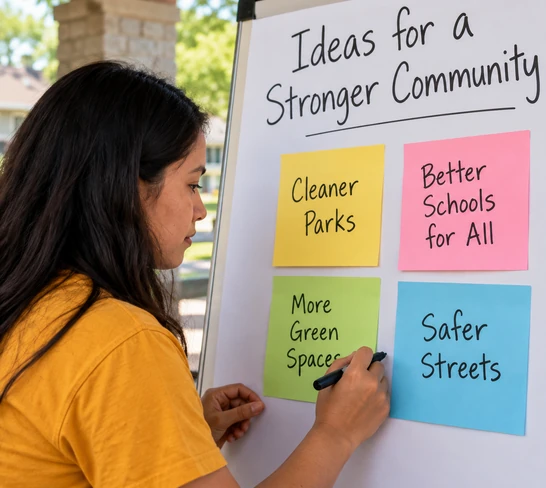
Neighborhood waste and environmental care
A local coalition of residents, youth volunteers, local environmental groups, and neighborhood representatives can begin with a waste audit, test household sorting, and coordinate with a verified collection partner. Use door-to-door outreach, neighborhood listservs, email updates, or opt-in text reminders for the pilot, then compare contamination, collection reliability, and resident participation against baseline observations. A cleanup event is an output; sustained waste handling is the desired outcome.
Community health awareness
A U.S. public-health campaign may work with local health departments, federally qualified health centers, school nurses, and trusted community partners. Verify health messages with qualified professionals and official guidance. Measure whether residents understand where and when to access services, not just how many flyers were distributed. Protect sensitive health information and avoid public participant lists.
Youth-led public space improvement
Youth-led improvements can begin with a safety walk, accessibility review, or survey of park users. Bring a concise proposal to the parks department, school district, transit agency, or local board that manages the site.
Campaign tools and tactics: when to use each
| Tool | Use when | Watch out for |
|---|---|---|
| Online petition | You have a specific addressee and request | Signatures do not prove implementation |
| Door-to-door outreach | You need detailed local input | Training, privacy and safety matter |
| Public meeting or town hall | Options require discussion | Attendance may exclude some groups |
| Community survey | You need a baseline or feedback | Sampling bias and unclear questions |
| Social media campaign | Rapid awareness and updates matter | Reach is not participation |
| Coalition building | Several groups share a goal | Roles and decision rights may conflict |
| Fundraising campaign | A scoped action needs resources | Publish expenditure and safeguards |
| Press release or local media | A verified public milestone merits coverage | Avoid unsupported impact claims |
Measure outcomes without confusing activity with impact
Plan monitoring and evaluation (M&E) before launch. Events, petition signatures and volunteer hours are outputs. Changes in knowledge, access, behavior or official response are outcomes. Longer-term community impact needs more time to assess and cannot automatically be credited to one campaign.
| Objective | Primary KPI | Guardrail or verification |
|---|---|---|
| Increase awareness | Change in correct answers on a short survey | Check who was excluded from the sample |
| Improve participation | Share of invited households contributing feedback | Review representation across groups |
| Recruit volunteers | Volunteers completing assigned shifts | Monitor retention and burnout |
| Secure a public response | Documented decision or formal reply | Check whether implementation follows |
| Improve a local service | Repeated observations of service performance | Account for seasonal or external changes |
Track campaign reach, social media engagement, conversion rate, attendance and media coverage, but do not mistake them for outcomes. Compare baseline and follow-up observations using the same method. If services or local conditions changed meanwhile, note that before attributing results to the campaign.
Common failure modes and how to prevent them
- A vague call to action: name one concrete task, recipient, and deadline.
- A campaign designed without residents: validate the problem through listening before launch.
- Digital-only participation: provide an offline route for questions and feedback.
- Volunteer burnout: rotate tasks and set reasonable shift lengths.
- Unclear money handling: document donations, procurement, and expenditure.
- Unsafe data collection: collect the minimum personal information, obtain consent, and restrict access.
- An unresponsive decision-maker: establish a follow-up date and alternative accountable contact.
- A successful event with no lasting change: assign post-event ownership and check results after the initial activity.
A realistic first-month campaign schedule
| Period | Priority | Evidence to retain |
|---|---|---|
| Week 1 | Listen, define the issue, identify stakeholders | Interview notes and baseline observations |
| Week 2 | Agree on objective, partner roles, budget and risks | Action plan and decision log |
| Week 3 | Test messages, recruit volunteers, launch a small pilot | Consent records and activity log |
| Week 4 | Review feedback and results; decide whether to adapt or scale | Outcome dashboard and public update |
Expand a pilot only when someone owns the next phase, resources are available, safety and privacy safeguards work, and residents have evidence that the change helps.
Frequently Asked Questions
Public campaign is the broader term for coordinated action directed at a public audience or issue. A grassroots campaign is a type of public campaign in which community members play a central role in identifying needs, organizing activities, and influencing decisions.
Yes. Start with a tightly defined issue, existing community spaces, volunteer capacity, a simple communications plan, and one measurable action. Avoid activities that require resources or approvals the group does not have.
Not necessarily. A petition can document support, but an effective advocacy process also identifies the competent decision-maker, the required procedure, supporting evidence, and a follow-up mechanism.
The timeline depends on the objective. A short awareness effort may last weeks; a community service change or formal policy request may take months. Define milestones and review points rather than assuming a universal campaign duration.
Offer accessible meeting locations, reasonable schedules, plain-language materials, offline channels, and confidential feedback options. Review whose views are missing and adjust outreach before treating consultation results as representative.
Publish a clear account of activities, outcomes, unresolved issues, expenditure where relevant, and the next responsible contact. If an initiative continues, agree on maintenance, volunteer succession, and periodic review.
Read Similar Articles
How to turn shared neighborhood challenges into durable community power, grassroots coalitions, and tangible municipal victories.
Learn More
Case studies in how municipal communities coalesce around environmental, housing, and educational issues to demand accountability.
Learn More